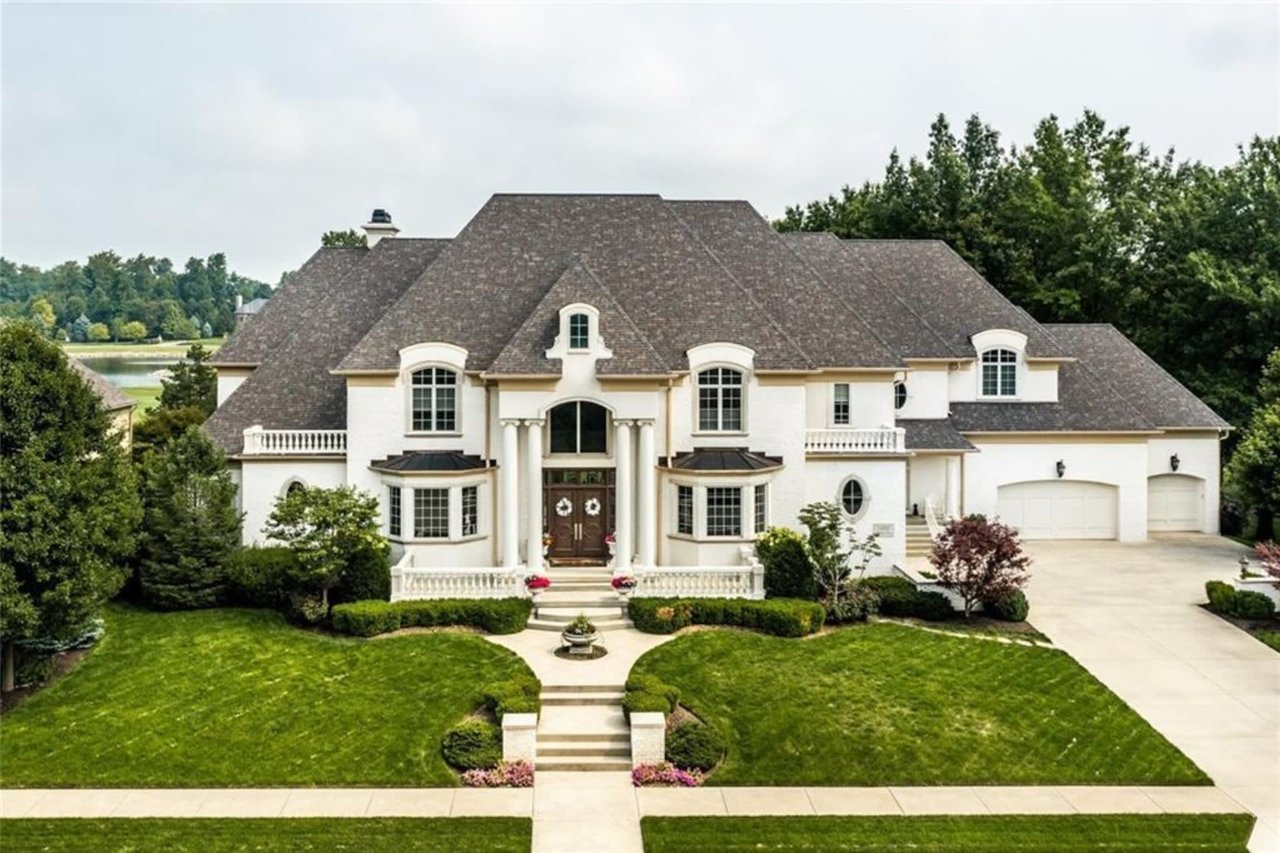
If you are selling a luxury home in Carmel, the biggest mistake you can make is reading the market too broadly. A citywide headline might tell you Carmel is still competitive, but that does not mean every price point, ZIP code, or neighborhood is moving the same way. To price well, time your launch, and protect your negotiating position, you need to read the market at a much more local level. Let’s dive in.
Carmel luxury data needs context
At the city level, Carmel still looks solid. In February 2026, homes in Carmel received an average of two offers, sold in about 48 days, and closed at a median price of $495,000 with a 99.1% sale-to-list ratio, according to the latest Carmel housing market data.
That said, luxury sellers should not stop at the headline. The broader Hamilton County market report showed 1.5 months of inventory in January 2026, 40 median days on market, and a 94.9% sale-price-to-list-price ratio. Those numbers point to a market that is still relatively tight, but not uniformly aggressive in every pocket.
For a premium home, that difference matters. A buyer deciding between neighborhoods, home styles, or price bands is not shopping based on a Carmel city median. They are comparing homes that feel like direct alternatives to yours.
Start with absorption, not hype
One of the clearest signals for sellers is absorption, or how quickly current inventory is being consumed. Hamilton County’s 1.5 months of inventory is a tight reading, especially when compared with the 4 to 5 months of supply often seen as a more balanced benchmark in the Carmel market data.
That is good news if you are planning to sell. Tight supply can support strong attention from buyers, but it does not guarantee that every luxury listing will move quickly or at full asking price.
In other words, low inventory helps, but it is not a substitute for smart pricing and preparation. In Carmel’s upper-end market, buyers still respond to condition, presentation, and how clearly your home justifies its position against nearby competition.
Days on market tells a deeper story
Many sellers look at days on market and ask a simple question: how fast are homes selling? In luxury real estate, the better question is: what is this number telling me about pricing, presentation, and buyer fit?
Citywide, Carmel homes sold in 48 days in February 2026, based on Redfin’s February 2026 Carmel report. But when you zoom in, the story changes.
Carmel pockets move at different speeds
In 46032, the median days on market was 32. In 46033, it was 36. In The Village of West Clay, it was 71.
That is a major spread. It tells you that some Carmel pockets are still moving relatively quickly, while others may require more patience, stronger staging, or tighter pricing discipline.
If your home is in a slower-moving pocket, that does not mean demand is weak. It means your launch strategy should allow for a longer marketing window and a more precise value story from day one.
List-to-sale ratio shows negotiation strength
If you want one shortcut for understanding seller leverage, look at list-to-sale ratio. It gives you a cleaner read on negotiation strength than median price alone.
Carmel citywide closed at 99.1% of list price in February 2026, according to city market data. But countywide, the January figure was 94.9%, and local submarkets varied even more.
Why city averages can mislead sellers
Carmel City Center posted a 97.2% sale-to-list ratio. The Village of West Clay came in at 98.7%. The Carmel Arts & Design District posted 93.8%.
For a seller, that range is important. If you anchor your pricing strategy to a citywide average, you may miss what buyers are actually willing to do in your specific pocket.
A home that is likely to trade close to list should be handled differently from one where buyers are negotiating harder. That is why a luxury pricing strategy should be built from comparable homes in your area and price range, not from broad market headlines.
Watch price reductions closely
Price reductions are not rare in Carmel right now. In February 2026, 34.0% of Carmel homes had a price drop, based on the latest city report.
For sellers, that number should not create panic. It should create discipline.
A price drop often means the market did not agree with the original launch price, the home was not positioned clearly enough, or the seller tried to test the market too aggressively. In luxury real estate, a reduction can still lead to a successful sale, but it often costs time and can weaken your leverage.
Small sample sizes can distort the picture
Some of Carmel’s most distinctive luxury pockets have very small monthly sales counts. In February 2026, The Village of West Clay sold 18 homes, while the Carmel Arts & Design District sold 9, according to Redfin neighborhood data.
That means one month of data can swing sharply based on just a few sales. For that reason, sellers should be careful about drawing big conclusions from a single month and should instead look at a multi-month comparison set for better perspective.
What Carmel’s current pockets are saying
Here is what the current data suggests in several Carmel luxury-adjacent pockets:
Area | Median Sale Price | Median Days on Market | Sale-to-List Ratio | Sold Above List |
|---|---|---|---|---|
46032 | $579,000 | 32 | 97.8% | 17.2% |
46033 | $525,000 | 36 | 98.4% | 21.6% |
The Village of West Clay | $707,500 | 71 | 98.7% | 22.2% |
Carmel Arts & Design District | $690,000 | 36 | 93.8% | 0.0% |
These numbers reinforce one main point: Carmel is not one luxury market. Different areas are producing different timelines, different negotiation patterns, and different pricing outcomes.
That is why your home should be measured against the most relevant alternatives, not just the most visible statistics. In a market like this, property-specific analysis beats citywide averages.
The upper end is still active
There is also encouraging data for sellers in higher price ranges. The Indiana 2025 market wrap-up showed that listings above $350,000 rose 12%, sales above $500,000 rose 14%, and homes above $750,000 made up less than 5% of total listings while still increasing 17% year over year.
Hamilton County also showed momentum at the upper end. New listings in the $500,000 to $749,000 range were up 17% year over year, pending sales in that same band were up 15%, and $1 million-plus price per square foot was up 6% year over year, according to the same statewide and county reporting.
For luxury sellers in Carmel, this matters. It suggests that qualified buyers are still active, especially when a home is well-positioned and meets expectations for condition, design, and value.
Timing matters, but only after pricing
Many sellers want to know the best time to list. The broad answer is still spring into early summer.
According to the 2025 Indiana market wrap-up, mortgage rates were lower from March through July during the usual prime homebuying season, and 2026 sales are projected to match 2025 through spring and outperform last year during peak summer months. That supports the idea that the strongest window for maximum exposure is still the traditional spring-to-summer stretch.
Still, timing should not be your first decision. If your pricing is off or your presentation is not ready, launching in the so-called best week of the year will not solve the problem.
What sellers should prioritize first
Before you focus on calendar timing, make sure you have these pieces in place:
- A pricing strategy based on your specific pocket and price band
- A realistic expectation for days on market
- A presentation plan that fits buyer expectations for your segment
- A negotiation strategy based on local sale-to-list trends
- A backup plan in case the first pricing approach misses the mark
When those pieces are right, timing becomes an advantage. When they are not, timing alone will not carry the listing.
How to read Carmel like a smart seller
If you are preparing to sell in Carmel’s luxury market, here is the simplest way to think about it: read the market in layers.
Start with city and county data for broad context. Then narrow to your ZIP code, your neighborhood, and your likely buyer competition. Finally, compare your home against the most relevant recent sales, current listings, and pending activity in your exact segment.
That layered approach gives you a better answer to the questions that matter most: How ambitious can you be on price? How quickly should you expect movement? How much negotiation should you plan for? And how important is timing for your specific property?
In a market with meaningful variation, the sellers who perform best are usually the ones who avoid generic assumptions. If you want a strategy built around your home, your timing, and your pocket of Carmel, the team at The CHG can help you read the market with the level of detail a premium listing deserves.
FAQs
Is Carmel still a competitive market for luxury sellers?
- Yes. Carmel remains competitive at the city level, but conditions vary by pocket, price range, and neighborhood, so sellers should not rely on citywide averages alone.
Should Carmel luxury sellers price from the city median?
- No. The city median is useful for broad context, but a luxury seller needs to price from relevant neighborhood, ZIP code, and price-band comparisons.
What do days on market mean for a Carmel home seller?
- Days on market can show how well a home’s price, presentation, and positioning match buyer expectations in that specific area.
Are price reductions common in Carmel right now?
- Yes. In February 2026, 34.0% of homes in Carmel had a price drop, which makes accurate pricing and strong preparation especially important.
When is the best time to list a luxury home in Carmel?
- Spring into early summer is still the strongest general window for exposure, but the best timing depends on your property’s pricing, presentation, and competition.