Pull up to West Carmel on a Saturday and the errands practically write themselves. Mulch and a new hose at Home Depot. A candle and some throw pillows at HomeGoods. Lunch at Chick-fil-A before the trip out to West Park for the splash pad, weather permitting, since the water only runs through the end of September. Every stop sits within a half mile of the last one along Michigan Road. None of them connect by foot. You get back in the car each time, because the corridor was built for driving between destinations, not walking among them.
That's not a complaint. It's just how this stretch of Carmel has worked since the first Home Depot and Kohl's went in years ago. What's changing is the assumption underneath it, and the shift is showing up in three unrelated places at once this year: a construction bulletin, a rezoning file, and a park built with input from Carmel schoolkids.
Michigan Road's place in Carmel
Michigan Road through West Carmel is a working commercial spine. It carries roughly 30,009 vehicles a day past the intersection near West Carmel Marketplace, according to a mid-2026 commercial listing for retail space there. Current in Carmel reported that Pearson Ford has operated at 10650 North Michigan Road since 1960, back when the property sat in a rural stretch of Hamilton County on U.S. 421, years before Carmel annexed the area in 2010.
Despite all that traffic and tenure, Carmel's own city council spent part of a 2025 meeting debating whether the corridor even functions as part of the city in the public's mind. Councilor Anita Joshi, who represents Carmel's West District, put the disconnect plainly. "We treat it as the back door corridor, instead of the Gateway corridor," she said, according to reporting from Current in Carmel. Joshi also noted that many of her own constituents don't realize the businesses along Michigan Road are Carmel businesses at all, a byproduct of the road technically falling under state design and maintenance authority even though it sits inside city limits.
Not every longtime business owner agrees there's a problem. John Pearson III, who ran Pearson Ford from 1981 to 2022, told the same meeting there's barely any land left for lease or sale up and down the road, which he takes as evidence the corridor already works exactly as intended.
Both things can be true. The corridor moves product and pays taxes. It just wasn't designed with a pedestrian in mind, and Carmel's 2022 comprehensive plan says as much directly, calling for a multi-use path to run alongside Michigan Road that doesn't exist yet.
The trail gap that's actually closing
That gap is starting to close, just not exactly where you'd expect. Carmel's spring 2026 construction bulletin, published by the city in March, laid out a project labeled "Expanding West Side Multi-Use Path Connectivity," running from March through fall. The bulletin specifically flags progress along 136th and 141st streets, paired with what the city describes as closing several smaller but critical gaps throughout the broader trail network on Carmel's west side.
It's not a single ribbon-cutting moment. It's a season of smaller connections finally getting stitched together, the kind of infrastructure most residents won't notice until the day they realize they can bike somewhere they used to have to drive. For a corridor whose own comprehensive plan has called for a path alongside it since 2022, that's the first real movement toward matching the paper to the pavement.
The proposal that admitted the real problem
The clearest sign that Carmel understands what's missing here isn't a trail. It's a housing proposal.
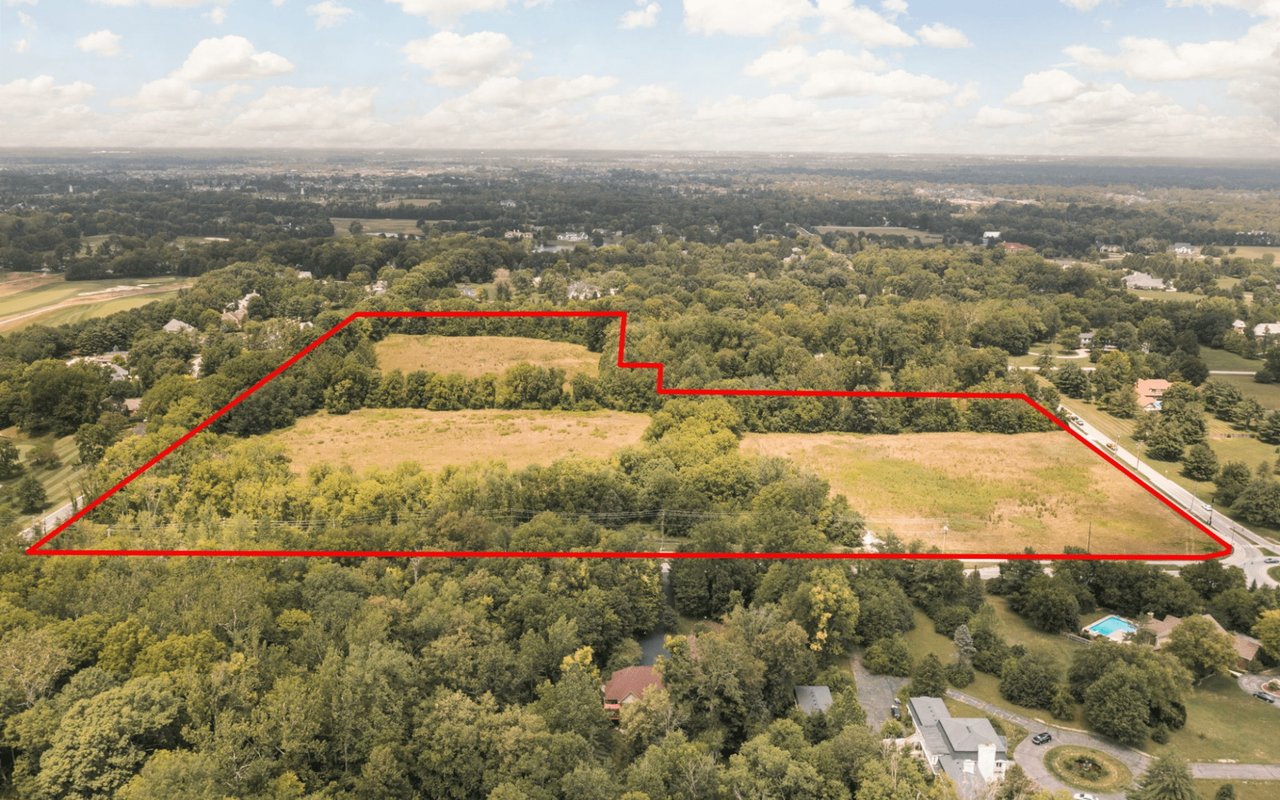
In early 2025, Carmel-based developer Edward Rose & Sons went before the city's plan commission asking to rezone 22 acres at 9998 North Michigan Road, the former headquarters site for Resort Condominiums International, from industrial to a planned mixed-use designation. The plan calls for 360 apartments across seven buildings, an 8,000-square-foot retail building, a centralized water feature, and five acres of open space including an existing wooded section.
The land use attorney representing the developer, Jon Dobosiewicz of Nelson & Frankenberger, told the plan commission something that doubles as the corridor's whole diagnosis: there is currently no other housing in the immediate area, so putting full-time residents on this parcel would hand Michigan Road businesses a customer base that lives close enough to actually walk or bike to them. Mike Steffes, CEO of the energy management firm ACES, which is headquartered near the site, spoke in favor for exactly that reason, calling the project a serious upgrade for that piece of Carmel.
Carmel's own planning administrator, Alexia Lopez, laid out the tradeoff for commissioners without softening it. More housing inventory and a bigger customer base for existing retailers, against the loss of one of the only industrial-zoned parcels left in the city. Only about 1 percent of Carmel's land carries an industrial designation, which is part of why the proposal drew attention well beyond the immediate neighborhood.
Whatever the commission ultimately decides, the project is worth understanding for what it reveals rather than for its outcome. A corridor that's spent decades built strictly for car-based retail is now being asked, by the people who build here for a living, to add its first meaningful cluster of nearby residents.
The corridor as it's stood | What's in motion for 2026 | |
|---|---|---|
Housing nearby | None within immediate walking distance of the retail | 360 units proposed at the former RCI site |
Zoning identity | Industrial parcel dating to before Carmel's 2010 annexation | Requested rezone to a planned mixed-use district |
Trail infrastructure | No multi-use path along Michigan Road itself | 2022 comprehensive plan calls for one; west side gap-closing runs through fall |
The park that already showed how this works
If you want proof that West Carmel residents will use a well-designed walkable space the moment it exists, you don't have to imagine one. It's already sitting at 2700 West 116th Street.
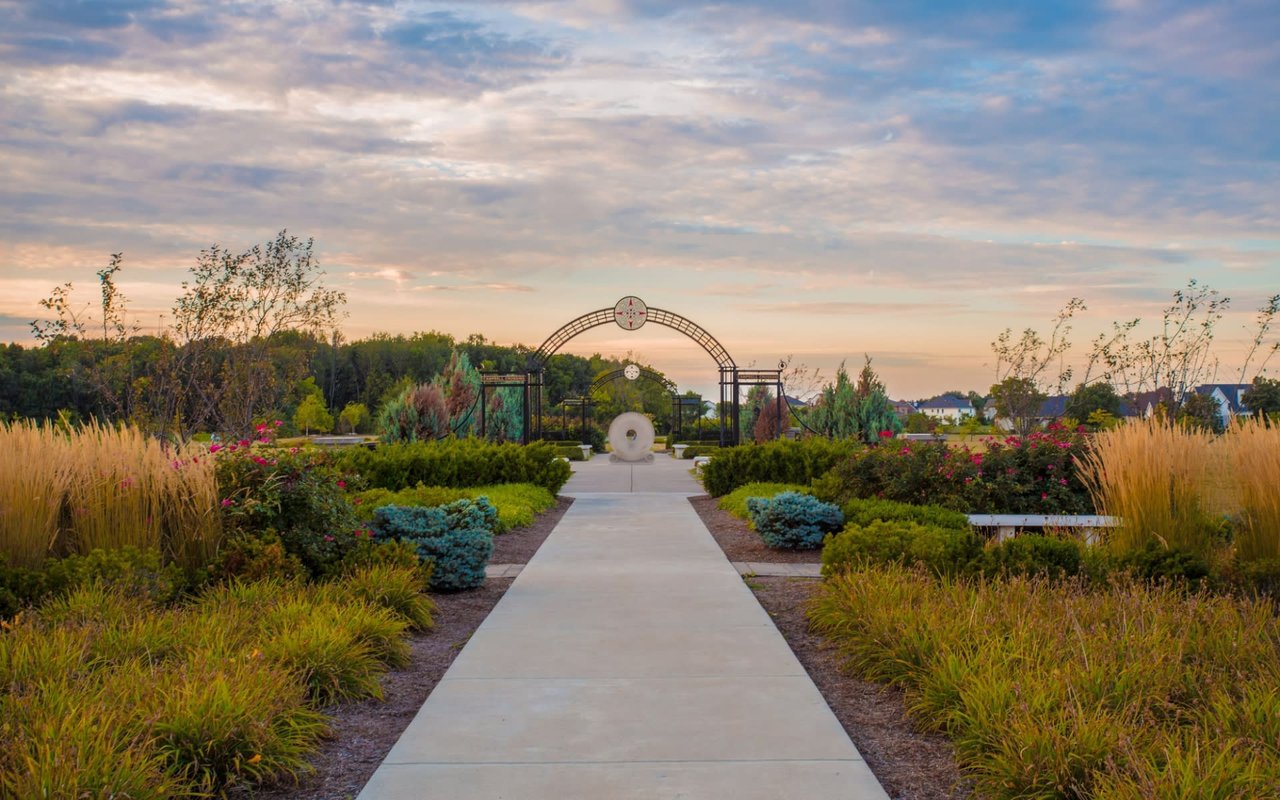
West Park opened in 2002 and spent two decades as a solid, unremarkable neighborhood park before Carmel Clay Parks and Recreation reimagined it in 2022 with funding from the Clay Township Impact Program. The design firm SmithGroup led the overhaul, and rather than defaulting to a standard designer's brief, the team pulled in feedback directly from local schoolchildren and their parents, letting that input shape the final layout. The result includes Jim Engledow Commons, where dry and wet play features intertwine across multiple levels instead of sitting as two separate zones, and The Groves, a woodland adventure play area tucked behind the Jill Perelman Pavilion with its own program pavilion and a zipline that draws kids willing to walk the extra few minutes into the trees.
The park now spans 120 acres with more than two miles of paved and soft-surface trails winding through a restored prairie maze and over pond boardwalks, plus a two-story sledding hill that becomes the neighborhood's default winter gathering spot the moment snow sticks. The splash pad closes for the season on September 30, which means whatever visits are left this month are the last ones until next Memorial Day.
None of that happened because Michigan Road got easier to walk. It happened because Carmel Clay Parks and Recreation built something worth walking to, and the region showed up. West Park has become a destination that pulls families from well outside West Carmel, according to write-ups tracking its renovation, proof that the appetite for a walkable, well-designed public space in this part of Carmel was never the missing ingredient. Access was.
What actually changes for the neighborhood this fall
None of this rewrites West Carmel into a walkable district by winter. The apartment proposal is still working through the entitlement process the city set up for exactly this kind of decision, the trail gaps are closing a segment at a time rather than all at once, and Michigan Road will still carry tens of thousands of cars a day no matter what gets built alongside it.
What does change is the assumption. For most of West Carmel's history, the corridor and the neighborhoods around it operated on separate logic: drive to the big box, drive to the park, drive back. This is the first year where the city's own construction calendar, its own rezoning docket, and its own parks department are all pointing the same direction at the same time. The corridor's role could change over the next year, depending on how much of what's currently proposed actually gets built.
If you're weighing what shifts like these mean for a specific address in West Carmel, whether you're watching the market from the sidelines or thinking ahead to your own next move, The Carrie Holle Group tracks these corridor-level changes as closely as the comps. Schedule a Personal Market Consultation and we'll walk through what's actually moving in this part of Carmel and what it's worth to you.